
GHSCO Newsletter

September 2025
Volume2 Number4
GHSCO Updates1
Enhancing Training Impact: GHSCO Conducted First Post-Training Follow-up Mission to Malaysia
Since 2024, Global Health Security Coordination Office (GHSCO) has operated the Core Personnel Training Program for ASEAN countries, offering courses in surveillance and laboratory diagnosis. A total of 20 trainees completed two training cycles in 2024. The recent follow-up mission marked the program’s first on-site assessment since its launch.
The mission was carried out in Malaysia from 29 to 30 October 2025, the home country of the program’s outstanding fellow. Korea Disease Control and Prevention Agency (KDCA) staff who participated in the program visited Malaysia to review the implementation status of the trainee’s action plan and observe relevant facilities at the Ministry of Health Malaysia. The outstanding fellow, Ms. Noorazyan Binti Haris—an entomologist working at the Ministry of Health Malaysia—developed an action plan focusing on “Strengthening Entomological Surveillance for Combating Vector-Borne Diseases (Zoonotic Malaria).”
The field assessment confirmed that the action plan activities were progressing as scheduled and that the enhanced malaria surveillance system had produced tangible improvements. The trainee successfully applied the research result and surveillance skills learned through the program to her work. Notably, she conducted two internal training sessions for field officers at the Ministry of Health Malaysia, contributing to an average 65% increase in participants’ knowledge levels. She also adopted a mosquito trapping technique—BG trap using dry ice as bait—learned during the training, into Malaysia’s national mosquito surveillance program to improve the efficiency of mosquito collection.
Through on-site consultations, KDCA staff recommended the development of guidelines to strengthen infection prevention and safety management for field staff, particularly in situations where workers may face exposure risks due to inadequate use of personal protective equipment.
<Results of Action Plan>
| Result | Indicator | Target |
|---|---|---|
| √ | Training sessions for health workers | Twice/year |
| √ | Development of digital surveillance system | Develop system and run pilot program |
| √ | Community awareness campaign | Twice/year |
| √ | Collaborative projects | Once or twice/year |
| √ | Data-sharing agreements | At least once |
The trainees expressed a high level of satisfaction, noting that the program significantly enhanced their professional capacities and felt that Korea’s structured training approach was particularly valuable. They also expressed interest in future training programs, including new courses on genomic sequencing.
During facility visits, KDCA staff noted that the Crisis Preparedness and Response Centre (CPRC) of the Ministry of Health of Malaysia operates a comprehensive disaster response system covering natural disasters and environmental public health incidents. The National Public Health Laboratory (NPHL) maintains quality standards comparable to those of WHO Regional Reference Laboratories in the arbovirus sector. The Institute for Medical Research Malaysia, designated as a WHO Collaborating Centre, carries out infectious disease diagnostics; vaccine and genomic analysis; and vector-control initiative such as the introduction of Wolbachia into Aedes aegypti mosquitoes to suppress dengue virus replication. This visit provided KDCA staff a valuable opportunity to observe advanced dengue prevention practices that are not yet widely adopted in Korea.
Through this in-person follow-up mission, KDCA confirmed the concrete impact of the training program. To further support the implementation of trainees’ action plans, KDCA plans to continue on-site consultations in 2026. Additionally, the 4th Core Personnel Training Program is under review to expand its curriculum to new areas beyond laboratory diagnostics.

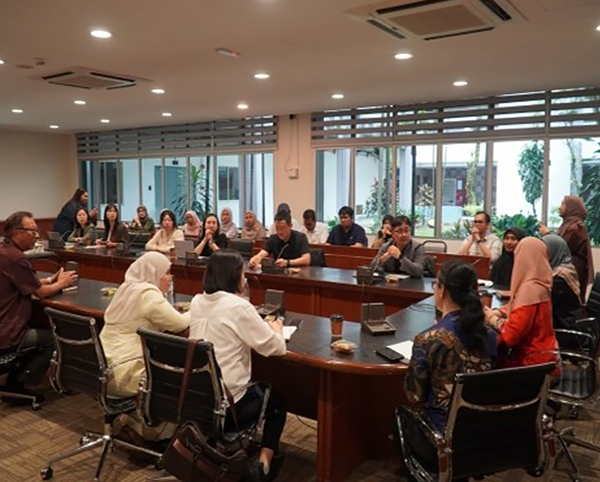
Meetings with staff at the Ministry of Health Malaysia