Volume3
Number1 June 2026
 Subscribe
 GHSCO Newsletter Library

Training and Capacity-Building Programs to Strengthen Epidemiological Investigation Capacity in Mongolia
The Korea Disease Control and Prevention Agency (KDCA) has been implementing the five-year “Mongolia Infectious Disease Response and Cooperation for AntimiCrobial Resistance and Laboratory Empowerment (MIRACLE) Project (2023 - 2027)” to strengthen Mongolia’s capacity for infectious disease preparedness and response since 2023. As part of this initiative, KDCA has provided annual infectious disease epidemiological investigation training and exercises for mentor-level trainees of Mongolia’s Field Epidemiology Training Program (FETP) since 2024.
The training program covered waterborne and foodborne infectious diseases in 2024, followed by measles and tuberculosis in 2025. In 2026, the program was designed around healthcare-associated infections (HAIs). Prior to the training, there were visits to national and regional hospitals for better understanding of the local healthcare environment and current conditions. Based on these observations, a scenario-based exercise was designed to facilitate practical discussions on strengthening Mongolia’s capacity for HAIs prevention and control.
The program also provided opportunities for participants to share the current status and case examples of HAIs in both countries, helping participants better understand and benchmark each country’s best practices.
According to the evaluation survey, participants reported a high level of satisfaction with the program, with an average score of 6.7 out of 7. The average score for prior understanding was 5.2 out of 7, while the self-assessment score for improved response capacity was 6.6 out of 7. These results suggest that the field-linked training successfully met its key objective of enabling participants to identify areas for improvement in their own country.
The epidemiological investigation exercise, designed based on an actual outbreak in Korea, covered the entire response process—from case notification and hypothesis development to environmental sample collection. Participants demonstrated strong interest in problem-solving exercise based on a real case and actively engaged in discussions throughout each stage. In particular, discussions focused on identifying which response measures should be prioritized and implemented, taking into account the structure and staffing conditions of healthcare facilities in Mongolia.
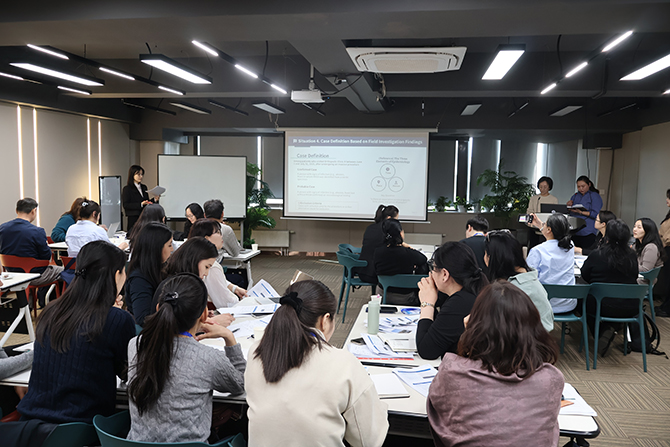 Scenario-Based Simulation Exercise
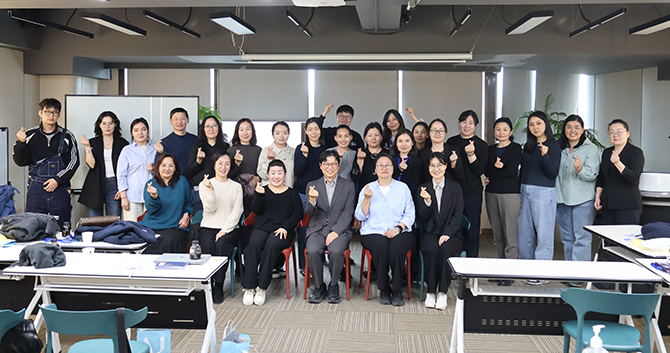
The training brought together Mongolian FETP mentors and infection prevention and control personnel from national and public hospitals. Participants demonstrated a high level of engagement and satisfaction throughout the training. The program also served as an opportunity for Mongolia’s mentor-level field epidemiologists to further develop as future leaders capable of driving improvements in the country’s healthcare system.
To ensure the continuity and long-term impact of the project, KDCA will continue to maintain close cooperation with Mongolia’s National Center for Communicable Diseases (NCCD). In addition, monitoring will be important to ensure that participants who completed the training effectively transfer the knowledge and skills gained through the program to staff at local healthcare facilities.