
 Volume3
Number1 June 2026
 Subscribe
 GHSCO Newsletter Library

Africa CDC: Strengthening Health Security and Sovereignty Through Africa CDC’s Integrated Infectious Disease Preparedness and Response System
Prof. Yap BOUM II
Deputy Incident Manager Mpox and Cholera
Incident Management Support Team
Africa Centres for Disease Control and Prevention
Partnership between KDCA and the Africa CDC
Amid the highlighted need for stronger international cooperation during the COVID-19 pandemic, the Official Development Assistance (ODA) project of “Strengthening infectous disease cooperation with Africa” which has been implemented since 2023, aims to strengthen Africa’s collaborative infectious disease response system.
As support for timely responses to public health emergencies, the project has provided training for emergency preparedness response personnel, deployed specialists, and offered training in laboratory diagnosis and specimen management, to enhance laboratory diagnostic and analytical capacity.
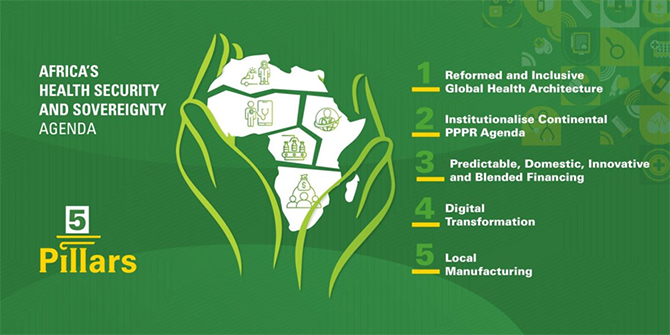
The Africa Centre for Disease Control and Prevention (Africa CDC) is the African Union’s specialized public health agency, established to strengthen Member States’ capacity to prevent, detect, and respond to public health threats. In an era marked by infectious disease outbreaks, climate-related crises, protracted humanitarian crises, and declining global health financing, the Africa CDC is advancing bold vision: Africa’s Health Security and Sovereignty (AHSS) Agenda. Its priorities include building strong public health institutions, improving sustainable financing, localizing medical supply chains, and establishing robust public health emergency management systems so that the continent can become more resilient and less dependent on external support.
Against this backdrop, Africa’s public health emergency management coordination system has continued to evolve. Following experiences from the COVID-19 pandemic and outbreaks of mpox, cholera, Ebola, and Marburg disease, the Africa CDC operated the Incident Management Support Team (IMST) model. The IMST coordinated more than 30 partners under the integrated approach of “One Team, One Plan, One Budget, One Monitoring and Evaluation Framework,” enabling rapid deployment of personnel, joint analysis, resource allocation, and cross-border collaboration.
Building on these lessons, the Africa CDC, together with the World Health Organization (WHO) and partners, is institutionalizing the IMST model to respond to the ongoing Ebola Bundibugyo outbreak occurring in Democratic Republic of Congo and Uganda. Unlike previous surge-support mechanisms activated only during crises, the IMST integrates preparedness and response within a single continental platform with a dedicated pillar for preparedness and readiness to high-risk countries. Prevention, Preparedness, Response, and Recovery (PPPR) are linked across the entire cycle through early warning systems, laboratory networks, genomic surveillance, risk communication, logistics, and financial management. Pandemic preparedness is no longer treated as a one-off activity, but as a measurable, continuously embedded component of national and regional systems.
With a focus on strengthening Africa’s health security and sovereignty, the Africa CDC has established the following core strategies for infectious disease preparedness and response:
1. Strengthening Surveillance and Laboratory Systems
The Africa CDC is enhancing integrated disease surveillance, genome analysis, and pathogen detection using platforms such as District Health Information Software 2 (DHIS2*). It is also supporting real-time data sharing from communities to laboratories.
*
District Health Information Software 2 (DHIS2): DHIS2 is an open source, web-based platform most commonly used as a health management information system (HMIS).
2. Localizing Medical Supply Chains and Expanding Pooled Procurement
Through the Africa Pooled Procurement Mechanism (APPM) and strategic partnerships, the Africa CDC is supporting regional production of diagnostics, vaccines, and medical countermeasures to reduce reliance on global supply chains and enable faster responses during outbreaks.
3. Strengthening Cross-Border Coordination
Recognizing that health threat knows no borders, the Africa CDC is institutionalizing structured cross-border collaboration frameworks, ensuring alignment between neighboring countries during outbreaks.
4. Institutionalizing Community-Centered Pandemic Prevention, Preparedness, and Response
The Africa CDC is integrating trained Community Health Workers (CHWs), Community Health Committees, and integrated Risk Communication and Community Engagement (RCCE) and Social and Behavior Change (SBC) approaches into routine systems. This supports early detection, community-led recovery, rapid field response, equitable last-mile delivery, effective risk communication, and strengthened community resilience—anchoring trust, accountability, and adaptive capacity across the full PPPR continuum.
5. Advancing Sustainable Financing, Partnership, and Accountability
The Africa CDC is advancing domestic resource mobilization and continental financing mechanisms—including the Africa Epidemics Fund—while strengthening coordination so that Member States, development partners, multilateral institutions, and private sectors can collaborate within accountable structures. The goal is to reduce reliance on short-term external funding and minimize duplication.
Together, these efforts mark a new chapter for health security in Africa.
The Africa CDC emphasizes not only responding to crises, but also evolving into a resilient and sustainable institution. This new approach is grounded in sovereignty, solidarity, and shared responsibility.
At a time when global health threats are increasingly interconnected, the Africa CDC stands as a strategic partner in strengthening global health security through a regionally driven and integrated strategy. The vision is a health system in which countries lead, the region coordinates, and the global community supports.
